When your desk becomes a pain in the neck – literally!
4 May 2026
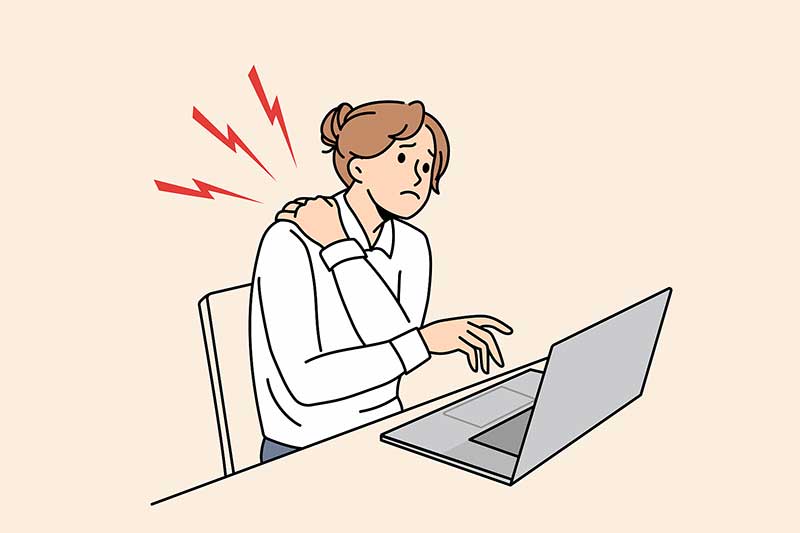
Sitting at a desk for long periods puts your neck under constant low-level strain.
Your head weighs around 4–5 kg. Your neck muscles are designed to hold it balanced directly over your shoulders. When you sit and let your head drift forward—like when looking at a laptop or phone—you increase the load on those muscles.
Over time, this leads to a few key issues:
1. Muscle overload and fatigue
The muscles at the back of your neck and upper shoulders stay switched on for long periods to support your head. They don’t get a chance to relax, which leads to fatigue, tightness, and that dull, aching pain many people feel by the end of the day. Deep tissue massage for the neck and shoulders can help ease this tightness while you work on your posture and desk habits.
2. Joint stiffness
Your neck joints (especially in the lower cervical spine) are meant to move regularly. Sitting still reduces movement, so the joints become stiff and less well lubricated. This can make turning your head feel restricted or uncomfortable.
3. Postural imbalance
Desk work often encourages a “forward head” and rounded shoulder position. This shortens some muscles (like the chest and upper neck) and lengthens and weakens others (like the deep neck flexors and upper back muscles). Over time, this imbalance makes it harder to maintain good posture—even when you try.
4. Reduced circulation
Holding one position for too long decreases blood flow to muscles, which can contribute to stiffness and slower recovery from minor strain.
In simple terms:
Your neck hurts because it’s working too hard, for too long, in a position it wasn’t designed to hold. That’s why small changes - like adjusting your screen height, taking movement breaks, and improving posture - can help make a big difference!
When to seek help
If your neck pain is persistent, worsening, or starting to affect your daily activities, it may be helpful to have it assessed.
For patients in Leamington Spa and Redditch, our chiropractic team can help identify the underlying cause of your discomfort and support you with a personalised approach to recovery.
When your desk becomes a pain in the neck – literally!
4 May 2026
Sitting at a desk for long periods puts your neck under constant low-level strain.
Your head weighs around 4–5 kg. Your neck muscles are designed to hold it balanced directly over your shoulders. When you sit and let your head drift forward—like when looking at a laptop or phone—you increase the load on those muscles.
Over time, this leads to a few key issues:
1. Muscle overload and fatigue
The muscles at the back of your neck and upper shoulders stay switched on for long periods to support your head. They don’t get a chance to relax, which leads to fatigue, tightness, and that dull, aching pain many people feel by the end of the day. Deep tissue massage for the neck and shoulders can help ease this tightness while you work on your posture and desk habits.
2. Joint stiffness
Your neck joints (especially in the lower cervical spine) are meant to move regularly. Sitting still reduces movement, so the joints become stiff and less well lubricated. This can make turning your head feel restricted or uncomfortable.
3. Postural imbalance
Desk work often encourages a “forward head” and rounded shoulder position. This shortens some muscles (like the chest and upper neck) and lengthens and weakens others (like the deep neck flexors and upper back muscles). Over time, this imbalance makes it harder to maintain good posture—even when you try.
4. Reduced circulation
Holding one position for too long decreases blood flow to muscles, which can contribute to stiffness and slower recovery from minor strain.
In simple terms:
Your neck hurts because it’s working too hard, for too long, in a position it wasn’t designed to hold. That’s why small changes - like adjusting your screen height, taking movement breaks, and improving posture - can help make a big difference!
When to seek help
If your neck pain is persistent, worsening, or starting to affect your daily activities, it may be helpful to have it assessed.
For patients in Leamington Spa and Redditch, our chiropractic team can help identify the underlying cause of your discomfort and support you with a personalised approach to recovery.
When your desk becomes a pain in the neck – literally!
4 May 2026
Sitting at a desk for long periods puts your neck under constant low-level strain.
Your head weighs around 4–5 kg. Your neck muscles are designed to hold it balanced directly over your shoulders. When you sit and let your head drift forward—like when looking at a laptop or phone—you increase the load on those muscles.
Over time, this leads to a few key issues:
1. Muscle overload and fatigue
The muscles at the back of your neck and upper shoulders stay switched on for long periods to support your head. They don’t get a chance to relax, which leads to fatigue, tightness, and that dull, aching pain many people feel by the end of the day. Deep tissue massage for the neck and shoulders can help ease this tightness while you work on your posture and desk habits.
2. Joint stiffness
Your neck joints (especially in the lower cervical spine) are meant to move regularly. Sitting still reduces movement, so the joints become stiff and less well lubricated. This can make turning your head feel restricted or uncomfortable.
3. Postural imbalance
Desk work often encourages a “forward head” and rounded shoulder position. This shortens some muscles (like the chest and upper neck) and lengthens and weakens others (like the deep neck flexors and upper back muscles). Over time, this imbalance makes it harder to maintain good posture—even when you try.
4. Reduced circulation
Holding one position for too long decreases blood flow to muscles, which can contribute to stiffness and slower recovery from minor strain.
In simple terms:
Your neck hurts because it’s working too hard, for too long, in a position it wasn’t designed to hold. That’s why small changes - like adjusting your screen height, taking movement breaks, and improving posture - can help make a big difference!
When to seek help
If your neck pain is persistent, worsening, or starting to affect your daily activities, it may be helpful to have it assessed.
For patients in Leamington Spa and Redditch, our chiropractic team can help identify the underlying cause of your discomfort and support you with a personalised approach to recovery.